Tenerife's big advantage is its climate: mild temperatures all twelve months, with averages that rarely drop below 18 °C or rise much above 28 °C on the coast. That means there's no bad season, just nuances. And there's a golden rule: the south is drier and sunnier; the north greener and cloudier.
Spring and autumn: the balance
March-May and September-November are, for many, the best: good weather, warm sea, fewer people than in high summer and gentler prices. Ideal for combining beach, Teide and excursions without heat or crowds.
Summer: guaranteed sun (and wind)
June-August is high season: guaranteed sun in the south and water at its best for swimming. The trade wind can pick up in the afternoon, which windsurfers appreciate. Book ahead, as it's the busiest time.
Cetaceans and Teide: all year
Two of the great plans have no season: the south-west's pilot whales and dolphins are resident and seen all twelve months, and Teide can be climbed in any season (in winter there may be snow up top, a lovely contrast with the coast).
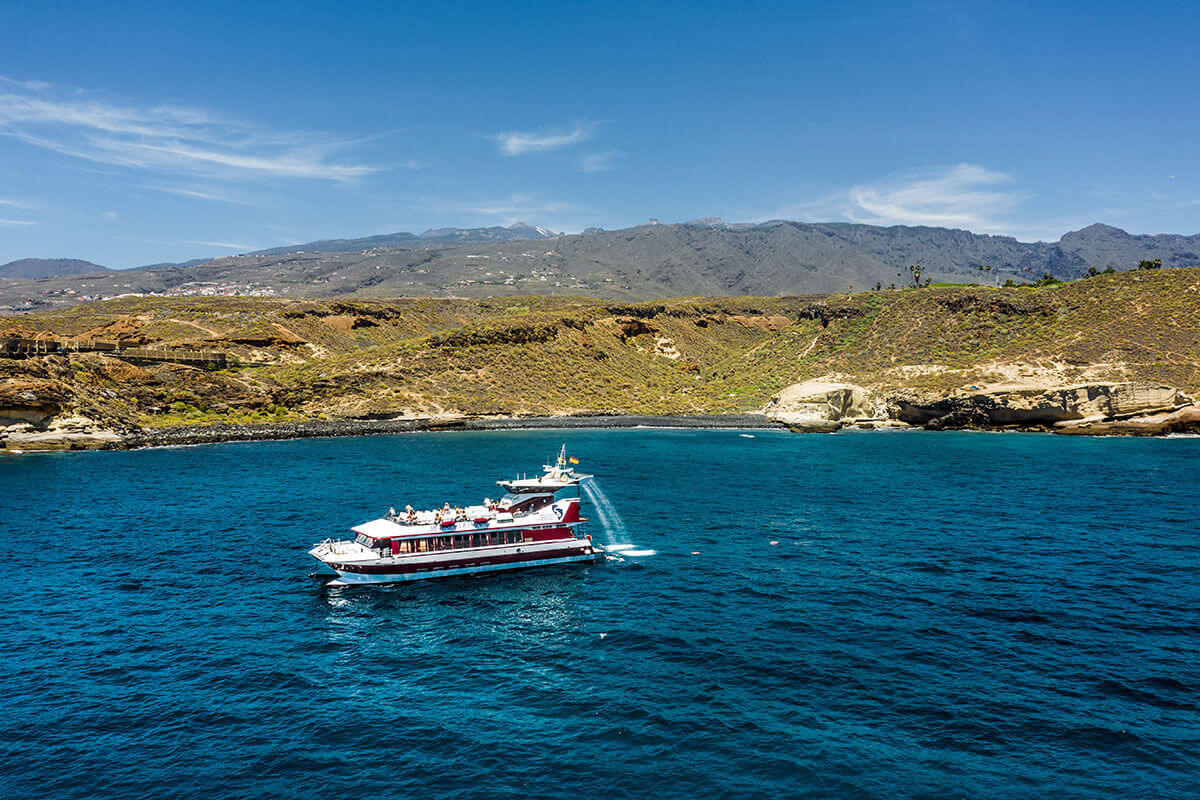 Whale Watching Atlantic Cruise, 3-hour departure from Puerto ColonCheck availability →
Winter: a sun-and-stars escape
From December to February, Tenerife is a sunny refuge for those escaping the European cold. The south stays mild, and Teide's clear nights (a Starlight Reserve) offer one of the best starry skies in the world.
There's no bad time for Tenerife: only the one that best fits your plan. Spring and autumn for balance, summer for full sun, winter to escape the cold; and cetaceans and Teide, always.